
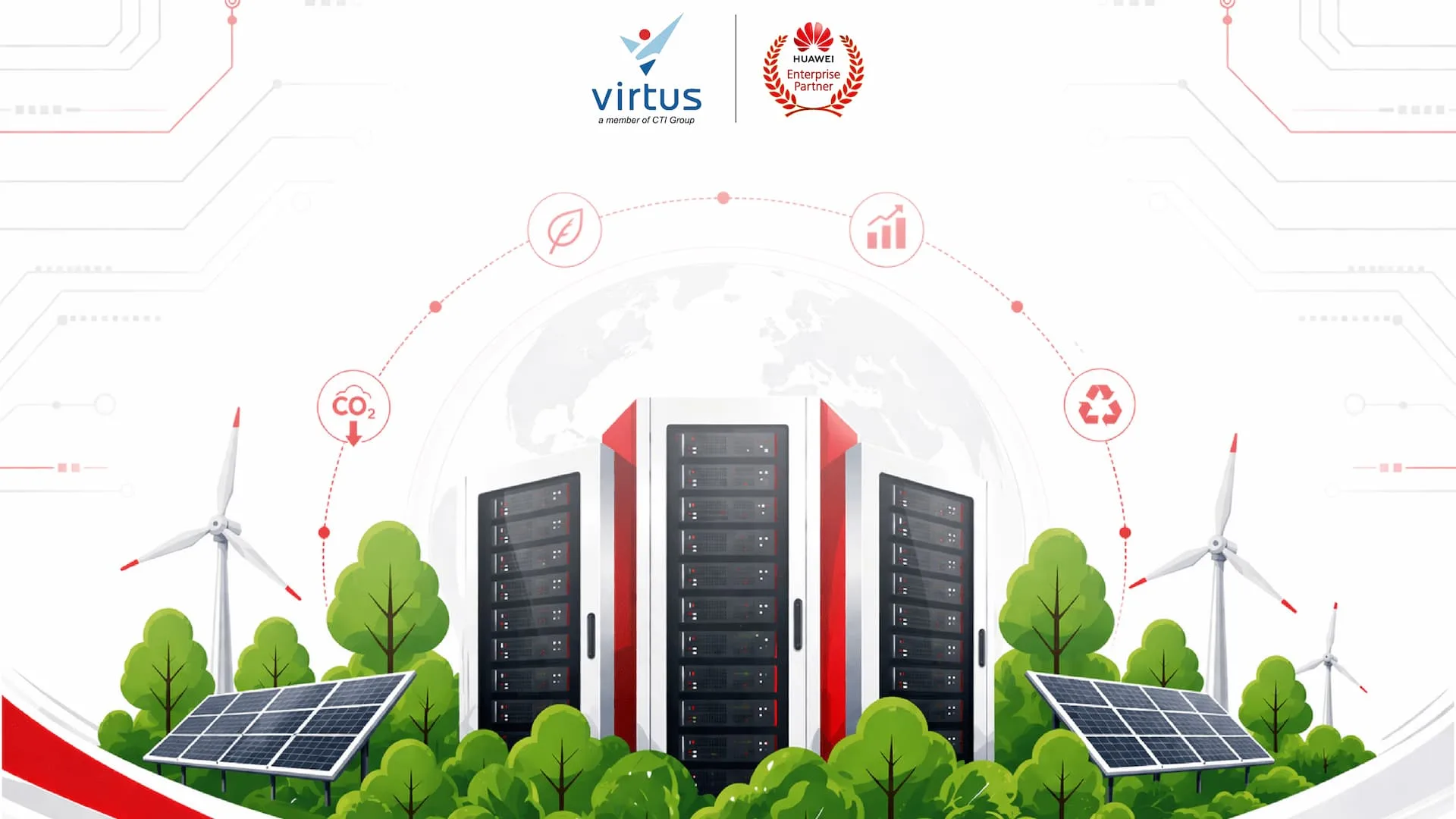
Today, the role of the data center has undergone a major transformation. It is no longer just a data storage facility but has evolved into a central operational hub that powers nearly every aspect of modern business. The surge in traffic driven by AI, cloud computing, and IoT has significantly increased the demand for more intelligent, efficient, and automated network infrastructure.
However, this raises an important question: is the current data center network architecture still capable of supporting real-time operations and rapidly growing data workloads? Many legacy systems are beginning to show limitations, particularly in scalability, energy efficiency, and adaptability to dynamic workloads.
These challenges are driving the emergence of Next-Generation Data Center Network Architecture. In this evolution, Huawei IP Network stands out as a key enabler, delivering a more intelligent, sustainable, and fully automated network that addresses the demands of modern digital infrastructure.
Why Traditional Data Center Network Architecture Is Being Phased Out
Traditional data center architectures were originally designed for an era where traffic patterns were relatively stable and predictable. However, this has changed dramatically with the rise of AI-driven applications, cloud computing, and large-scale digital services operating in real time.
As a result, legacy data centers are increasingly facing challenges such as traffic bottlenecks, limited scalability, and heavy reliance on manual operations that are slow and prone to human error. In addition, high energy consumption has become a critical issue as organizations prioritize efficiency and sustainability.
In this context, traditional approaches are no longer sufficient. A new network architecture is required—one that is not only fast and stable but also capable of adapting automatically to dynamic workload changes.
Key Pillars of Next-Generation Data Center Network: AI-Driven & Sustainable
The transformation toward Next-generation Data Center Network Architecture is built on three core pillars: AI-driven automation, energy sustainability, and deterministic connectivity for real-time operations.
| Pillar | Description | Impact on Data Center |
| AI-Powered Automation | AI-driven networking enables automated optimization of traffic routing and self-healing capabilities during failures without manual intervention. | Improves operational efficiency, reduces human error, and accelerates response to network issues. |
| Green Networking | Focuses on energy-efficient infrastructure design to optimize power consumption across the data center. | Reduces operational costs and supports corporate carbon reduction goals. |
| Deterministic Networking | Provides low-latency, highly reliable connectivity for real-time applications. | Ensures system reliability for manufacturing, AI analytics, and IT-OT integrated environments. |
Step-by-Step Migration to Next-Generation Network Architecture
Migrating to a Next-generation Data Center Network Architecture requires a structured approach to ensure a smooth transition without disrupting existing operations. Key steps include:
Audit AI Workloads and Capacity
Ensures the infrastructure can handle increasing traffic from cloud and AI-driven applications while maintaining stable performance.
Evaluate Network Automation Readiness
Assesses how ready the system is for intelligent routing and automation to reduce reliance on manual operations.
Analyze Energy Efficiency
Identifies legacy equipment with high power consumption to support the transition toward a greener, more efficient data center network.
Test Network Latency
Ensures support for deterministic networking with low and stable latency, critical for real-time enterprise operations.
Verify Layered Security
Implements network segmentation to protect data and systems from cyber threats while maintaining infrastructure integrity.
Integrate with Huawei IP Network
Deploys and validates the new architecture using Huawei IP Network to ensure optimal, scalable, and end-to-end modern network performance.
Huawei IP Network as a Smart Solution for Modern Data Center Ecosystems
Huawei IP Network is designed to address the full spectrum of modern enterprise challenges. By integrating campus networks, production networks, and data center networks into a unified ecosystem, it delivers a holistic enterprise network solution.
With AI-driven networking capabilities, the system enables automated traffic management, real-time route optimization, and dynamic performance adjustments without manual intervention.
In addition, IT and OT convergence provides end-to-end operational visibility, enabling organizations to make faster and more accurate data-driven decisions. Combined with high scalability, Huawei IP Network ensures that infrastructure can grow alongside business demands without compromising performance or energy efficiency.
Also Read: Understanding Data Center Virtualization and Its Role in Managing Business-Critical Data
Optimize Your Infrastructure with Virtus Technology Indonesia
The transition to a Next-generation Data Center Network Architecture is not only about adopting new technologies but also about executing the right implementation strategy aligned with business needs. Without a well-planned approach, the full potential of modern infrastructure cannot be achieved.
As a technology partner, Virtus Technology Indonesia (part of CTI Group) supports enterprises in adopting Huawei IP Network through end-to-end services, including planning, implementation, and integration with existing IT ecosystems. This ensures a smooth transition without disrupting ongoing operations.
Contact Virtus Technology Indonesia to learn how your organization can build a more intelligent, efficient, and future-ready network infrastructure that meets the demands of the digital era.
Author: Ary Adianto
Content Writer CTI Group