Business growth often comes with increasing data management requirements. From customer transactions and databases to operational applications and everyday digital systems, businesses rely on storage infrastructure that can deliver fast and reliable data access.
When storage capacity becomes limited or performance is no longer sufficient, the impact goes beyond the IT department. Slow applications can affect employee productivity, disrupt transactions, and even impact customer experience.
That is why businesses should consider storage as an important part of their operational strategy and long-term growth. Choosing the right Enterprise Storage Solution can help organizations manage increasing data demands while maintaining efficient operations. One solution worth considering is Dell PowerStore Elite, designed to support modern data center requirements.
What Is Enterprise Storage and Why Do Businesses Need It?
Enterprise storage is a data storage system designed to support business operations, including databases, business applications, virtualization, and private cloud environments.
Unlike conventional storage, enterprise storage is built to handle larger workloads, provide consistent data access, and support more complex infrastructure management requirements.
For businesses, the right storage infrastructure helps ensure that data and applications remain accessible when needed. This is essential because activities such as transaction processing, customer management, and internal operations depend heavily on system availability.
Enterprise Storage Management Challenges in Modern Data Centers
As businesses increasingly adopt digital applications, maintaining optimal storage infrastructure becomes more challenging.
One of the main challenges is growing data volume, which requires greater storage capacity. At the same time, applications such as ERP systems, databases, and transaction platforms need consistent performance to keep business operations running smoothly.
Monitoring and maintenance complexity also place additional demands on IT teams. As infrastructure grows, more resources are required to maintain system performance and availability.
Businesses must also consider long-term infrastructure management costs. Continuously adding storage hardware is not always the most efficient approach, especially when existing capacity has not been fully utilized.
These challenges highlight the need for storage technology that balances performance, capacity, and management efficiency.
Understanding Modern Enterprise Storage Technologies
To address these requirements, modern enterprise storage combines several technologies that help businesses manage data more efficiently.
All-Flash Storage
All-Flash Storage uses flash-based media to deliver high-speed data access. This technology is suitable for workloads that require fast response times, such as databases and business applications.
Unified Storage
Unified Storage allows businesses to manage block and file storage within a single platform. This approach helps simplify infrastructure management across different storage requirements.
Deduplication and Compression
These technologies optimize storage capacity by reducing duplicate data and the amount of space required to store information. As a result, businesses can utilize their storage resources more efficiently.
Intelligent Automation
Intelligent Automation simplifies infrastructure management by automating various storage activities. This helps reduce manual tasks, allowing IT teams to focus more on other business priorities.
Together, these technologies are important considerations when selecting an enterprise storage platform. Businesses need more than just large storage capacity. They also need infrastructure that supports application performance and simplifies data center management.
One platform that brings these capabilities together is Dell PowerStore Elite.
Introducing Dell PowerStore Elite and Its Benefits for Enterprises
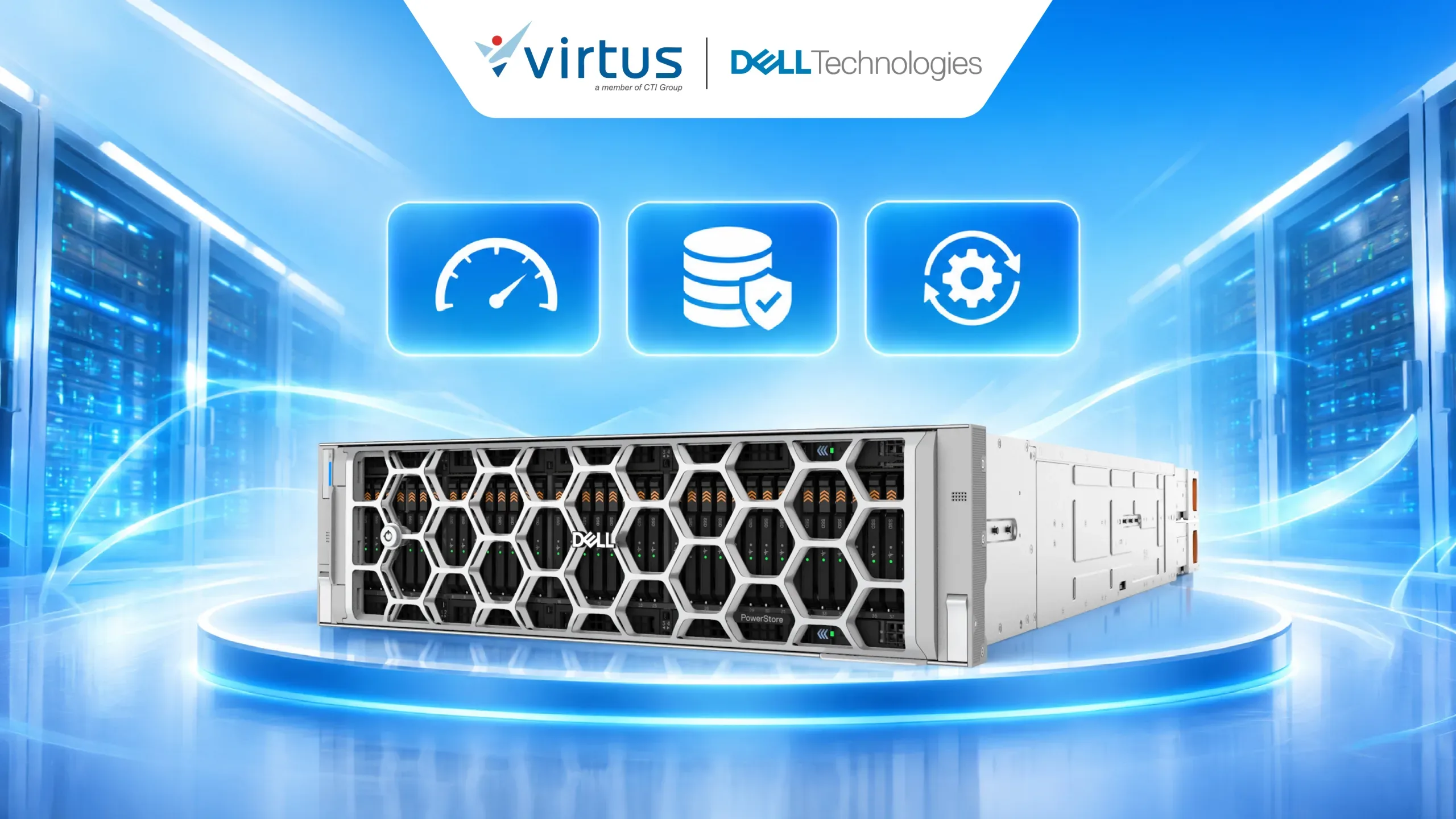
Dell PowerStore Elite is an all-flash storage platform from Dell Technologies designed to support enterprise data center requirements. Powered by NVMe architecture and Dell PowerStoreOS innovations, the platform delivers improvements in performance, storage efficiency, and infrastructure management flexibility.
Dell PowerStore Elite is available in three models: PowerStore 1500, 5500, and 9500. These options allow businesses to align their storage infrastructure with workload requirements and operational scale. The Gen 3 platform also supports block and file storage through a unified deployment.
By combining these technologies, Dell PowerStore Elite is designed to help businesses manage growing data requirements while optimizing their existing infrastructure.
When Should Businesses Upgrade Their Enterprise Storage and How Should They Choose the Right Solution?
Businesses should consider upgrading their enterprise storage when available capacity becomes limited, application performance declines, or infrastructure management costs continue to increase.
Before upgrading, organizations should evaluate their workload requirements, data growth, storage capacity needs, and future data center development plans.
Dell PowerStore Elite offers several capabilities that businesses can consider when planning their infrastructure modernization.
1. Up to 3x Performance
Based on Dell internal testing with specific configurations and workloads, PowerStore Elite delivers up to 3x the IOPS and throughput of the previous-generation systems tested. Actual results may vary depending on configuration and workload characteristics.
2. 6:1 Data Reduction Guarantee
Deduplication and compression technologies help optimize storage utilization. Dell offers a guaranteed average 6:1 data reduction ratio for eligible reducible data, subject to the applicable program terms and conditions.
This allows businesses to make more efficient use of available storage capacity and optimize their infrastructure investments.
3. Up to 5.8 PB Effective Capacity
Under the maximum PowerStore 9500 configuration, Dell PowerStore Elite offers up to 5.8 PB of effective capacity in a single 3U chassis, based on an assumed 6:1 data reduction ratio. This capacity helps support large-scale data storage requirements while optimizing data center space.
4. Intelligent Automation
Automation simplifies storage management, including monitoring and performance and capacity management activities. Dell reports the potential to reduce manual effort by up to 95%, based on its internal analysis.
This can help IT teams reduce administrative workloads and allocate more time to infrastructure development and other strategic business priorities.
5. Flexible Modernization
Flexible architecture and support for gradual infrastructure development help businesses adapt their storage environments as data volumes and workload requirements grow.
PowerStore’s intergenerational compatibility also provides flexibility when developing existing infrastructure. This allows businesses to plan modernization gradually without necessarily replacing their entire storage environment.
Actual performance, effective capacity, and data reduction depend on configuration, workload characteristics, and Dell’s applicable technical and program terms.
Modernize Your Data Center with Virtus Technology Indonesia
Choosing the right enterprise storage is an important part of a company’s infrastructure development strategy. Storage capacity, application performance, management efficiency, and long-term business requirements should all be considered before selecting a solution.
Dell PowerStore Elite can be an option for businesses looking to improve storage performance while optimizing data center management.
As a Value-Added IT Distributor and part of CTI Group, Virtus Technology Indonesia provides Dell Technologies solutions to support enterprise infrastructure requirements. Contact the Virtus team to discuss Dell PowerStore Elite and find a storage solution that aligns with your business needs.
Author: Ary Adianto
Content Writer, CTI Group