Changes in software licensing models have prompted many organizations to reassess their virtualization strategies. Beyond the investment in virtualization platforms, businesses must also account for operational expenses such as provisioning, maintenance, and the growing complexity of infrastructure management.
As a result, infrastructure modernization is no longer just about finding an alternative hypervisor. Organizations need solutions that reduce the Total Cost of Ownership (TCO) while simplifying IT operations to deliver long-term efficiency.
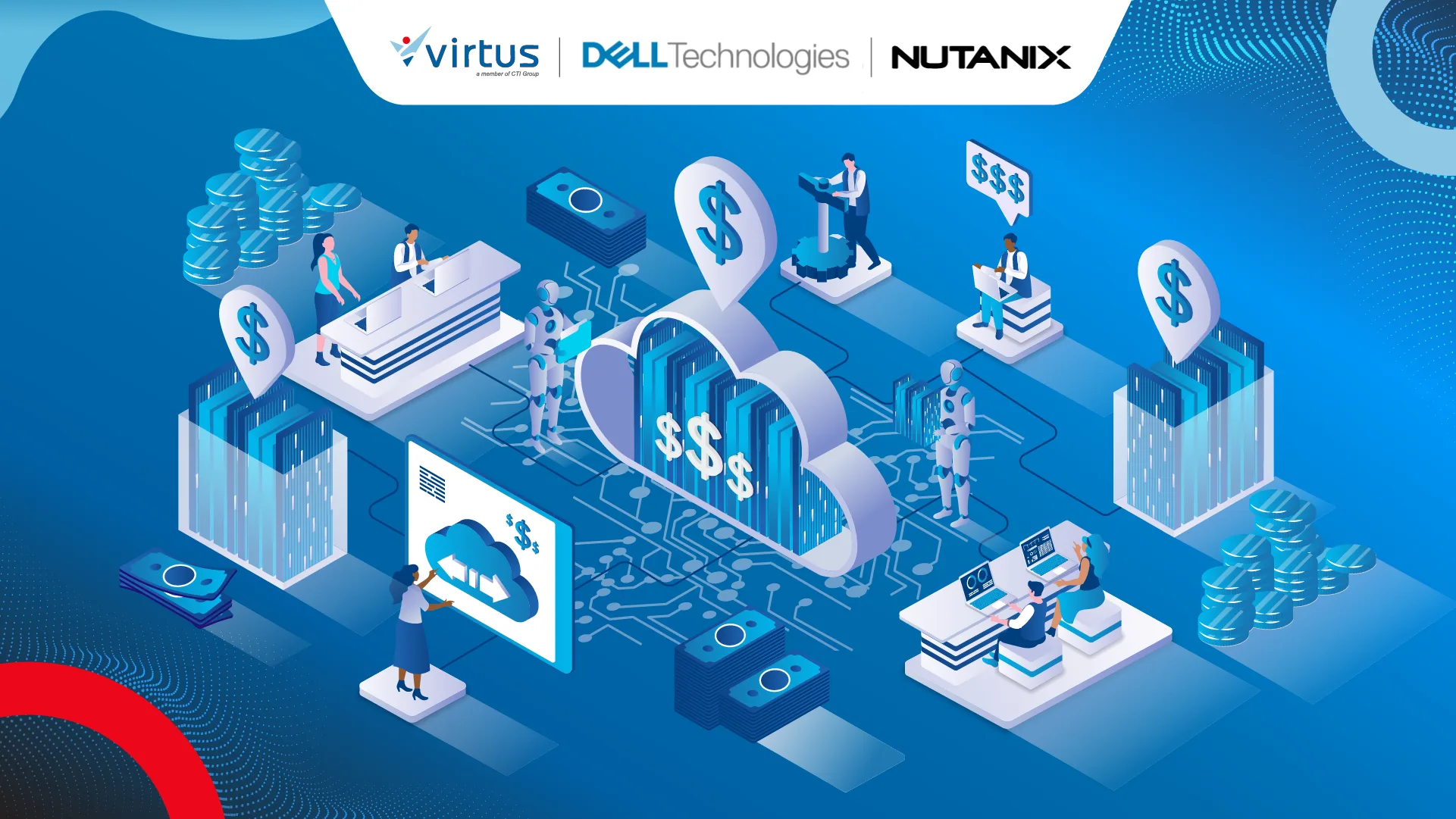
One approach gaining traction is the adoption of private cloud environments that combine virtualization, infrastructure management, and automation into a unified ecosystem. This enables businesses to reduce operational complexity while building a more agile and scalable IT foundation for future growth.
Understanding Virtualization and Its Role in IT Infrastructure
Virtualization is a technology that enables multiple Virtual Machines (VMs) to run on a single physical server through a hypervisor. This approach helps organizations maximize infrastructure utilization while accelerating IT service delivery.
For years, virtualization has served as the foundation for critical business applications, databases, ERP systems, and private cloud environments. However, as workloads continue to grow and IT environments become more complex, organizations require capabilities that go beyond simply running virtual machines.
Why Are Virtualization Costs Increasing?
Many organizations assume that virtualization costs are limited to software licensing. In reality, licensing represents only one part of the overall investment.
In addition to upfront infrastructure investments, businesses must also consider ongoing operational expenses, infrastructure management, and the time IT teams spend performing repetitive manual tasks. Without proper optimization, these factors continue to drive up the Total Cost of Ownership (TCO).
Key cost components include:
CapEx (Capital Expenditure)
CapEx includes the initial investment required to build a virtualized environment, such as servers, storage, networking, and software licenses. As business demands grow, organizations must also invest in infrastructure expansion and hardware refreshes to support increasing workloads.
OpEx (Operational Expenditure)
Operational expenses include monitoring, patch management, maintenance, troubleshooting, and infrastructure lifecycle management. The more manual these processes remain, the greater the operational workload and resource requirements for IT teams.
Cloud Migration and Hybrid Cloud Costs
Many organizations are adopting hybrid cloud strategies, requiring them to manage both on-premises and cloud environments simultaneously. Without an integrated platform, migrating and managing workloads across multiple environments becomes more complex and costly.
Hidden Costs That Are Often Overlooked
Beyond planned expenses, there are several hidden costs that can significantly impact IT budgets. Manual VM provisioning, configuration errors, disconnected management tools, and unexpected downtime can all reduce productivity while increasing operational costs.
Why Is Private Cloud a More Efficient Solution?
A private cloud delivers more than virtualization. It simplifies infrastructure management, accelerates resource provisioning, and provides greater control over workloads and infrastructure resources. With centralized management, IT operations become more efficient while remaining flexible enough to support changing business requirements.
To achieve this, many organizations adopt Hyperconverged Infrastructure (HCI), which combines compute, storage, and virtualization into a single platform. This architecture reduces infrastructure complexity while simplifying deployment and ongoing management.
Nutanix provides an HCI platform designed to build modern private cloud environments with simplified management, flexible scalability, and consistent performance. However, maximizing these benefits also requires automating day-to-day IT operations.
A Modern Private Cloud Needs Automation
While private cloud simplifies infrastructure, many IT processes are still handled manually. Tasks such as virtual machine provisioning, approval workflows, configuration, patching, and lifecycle management often involve multiple repetitive steps.
As IT environments grow, these manual processes consume valuable time and increase the risk of human error, limiting the full benefits of a private cloud.
This is why IT automation has become an essential component of infrastructure modernization. By automating operational workflows, organizations can accelerate service delivery, maintain configuration consistency, and allow IT teams to focus on higher-value initiatives instead of routine administrative tasks.
Read More: Discover Why OpenShift Virtualization Engine Should Be the Core of Your Business Infrastructure
Build a More Efficient Private Cloud with Dell Automation Platform and Nutanix
To maximize the value of infrastructure modernization, organizations need the right combination of a modern private cloud platform and intelligent automation.
Nutanix: A Simpler Foundation for Private Cloud
Nutanix delivers a Hyperconverged Infrastructure (HCI) platform that integrates compute, storage, and virtualization into a single solution. This approach simplifies infrastructure management, accelerates workload deployment, and enables organizations to scale resources efficiently as business needs evolve.
With centralized management, IT teams can operate private cloud environments more efficiently without the complexity of traditional infrastructure architectures.
Dell Automation Platform: Simplifying IT Operations Through Automation
Modern infrastructure requires equally modern operations. Dell Automation Platform automates key operational processes, including provisioning, deployment, patching, and lifecycle management using validated blueprints.
By reducing manual tasks, organizations can accelerate service delivery, maintain consistent configurations, and minimize the risk of human error across their IT environments.
Dell Automation Platform and Nutanix: A Powerful Combination for an Efficient Private Cloud
When Nutanix provides the private cloud foundation and Dell Automation Platform delivers intelligent IT automation, organizations gain a solution that simplifies infrastructure while optimizing day-to-day operations.
Together, these solutions help organizations:
- Accelerate workload deployment and service delivery.
- Simplify IT infrastructure management.
- Reduce repetitive manual tasks.
- Maintain consistent infrastructure configurations.
- Optimize infrastructure resource utilization.
- Lower long-term operational costs.
Modernize Your Private Cloud with Dell Automation Platform, Nutanix, and Virtus
By combining Nutanix as the foundation of a modern Hyperconverged Infrastructure with Dell Automation Platform for IT automation, organizations can accelerate deployment, reduce manual operations, and optimize operational costs without compromising infrastructure flexibility or performance.
As an Authorized Dell Technologies Partner and Nutanix Partner, Virtus Technology Indonesia helps organizations design and implement private cloud solutions tailored to their business needs, from infrastructure assessments and Proof of Concept (POC) to full deployment and implementation.
Contact Virtus Technology Indonesia today to learn how Dell Automation Platform and Nutanix can help your organization build a more efficient, modern, and future-ready private cloud infrastructure.
Author: Ary Adianto
Content Writer, CTI Group