
AI Agents are taking on a larger role in business operations. Beyond generating content or analyzing data, AI Agents can now write code, access systems, call APIs, and execute tasks autonomously.
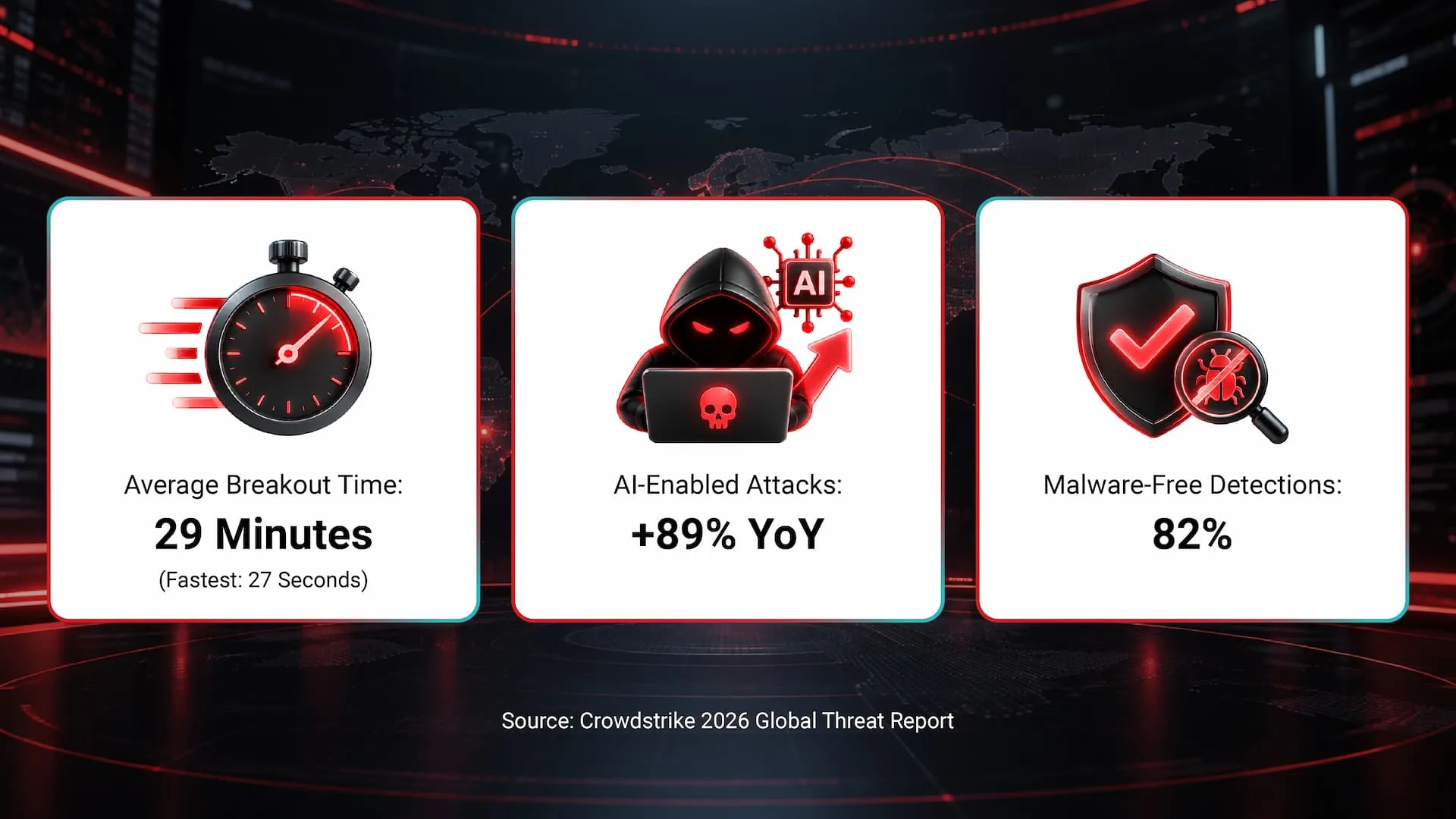
At the same time, this development is expanding the enterprise attack surface. The CrowdStrike 2026 Global Threat Report reports that attacks by AI-enabled adversaries increased by 89 percent year over year. The average eCrime breakout time also fell to 29 minutes, with the fastest observed breakout taking just 27 seconds. (Download the full report via the button at the top of this article).
For enterprises, the challenge is no longer just securing users who use AI. Organizations also need to know which AI Agents have access, who is behind them, and what actions they are taking.
What Is AI Agent Identity Security and Why Is It a Priority?
AI Agent Identity Security is a security approach designed to give AI Agents trusted identities, dynamically control their access, and ensure their actions can be linked to the responsible person or system.
This is becoming increasingly important because AI Agents can operate autonomously using the access they are given. When an agent uses the same credentials as a user or service account, its activity can be difficult to distinguish from legitimate user activity.
The risk becomes greater when organizations have Shadow AI. Developers or employees may use AI coding assistants and agentic tools without going through the security team’s registration and control processes.
As a result, organizations can lose visibility into:
- Which AI Agents are being used
- The credentials and systems they can access
- The activities performed by each agent
- The connection between AI instructions and actions taken in the system
CrowdStrike notes that AI Agents can execute code, access systems, and move data using real credentials. This makes agent identity an increasingly important part of enterprise security controls.
Why Are Traditional Service Accounts No Longer Enough for AI Agents?
Service accounts and API keys are still widely used for automation. However, long-lived credentials create challenges when used by AI Agents that can take actions dynamically.
If credentials are compromised, the access can be misused. Organizations also need to know which agent is using the access and what actions it performs during execution.
The difference can be summarized simply:
| Traditional Service Account | AI Agent Identity Security |
| Long-lived access | Just-In-Time access |
| Credentials can remain active long term | Access is granted based on need |
| Difficult to link activity to a specific agent | Agents have trusted identities |
| Limited activity visibility | Activities can be linked to the agent and its context |
| Risk increases if credentials are compromised | Least privilege and Zero Standing Privileges |
With Continuous Identity and Zero Standing Privileges, access can be granted based on context and need instead of remaining active permanently. CrowdStrike Agentic Identity Provider is designed to give AI Agents trusted identities while connecting them to the human or workload behind them.
CrowdStrike Fal.Con 2026 Innovations for Securing AI Agents
CrowdStrike Fal.Con 2026 Innovations for Securing AI Agents
Fal.Con 2026 introduced three CrowdStrike Falcon capabilities designed to address AI Agent risks across identity, runtime activity, and the software supply chain.
1. Agentic Identity Provider
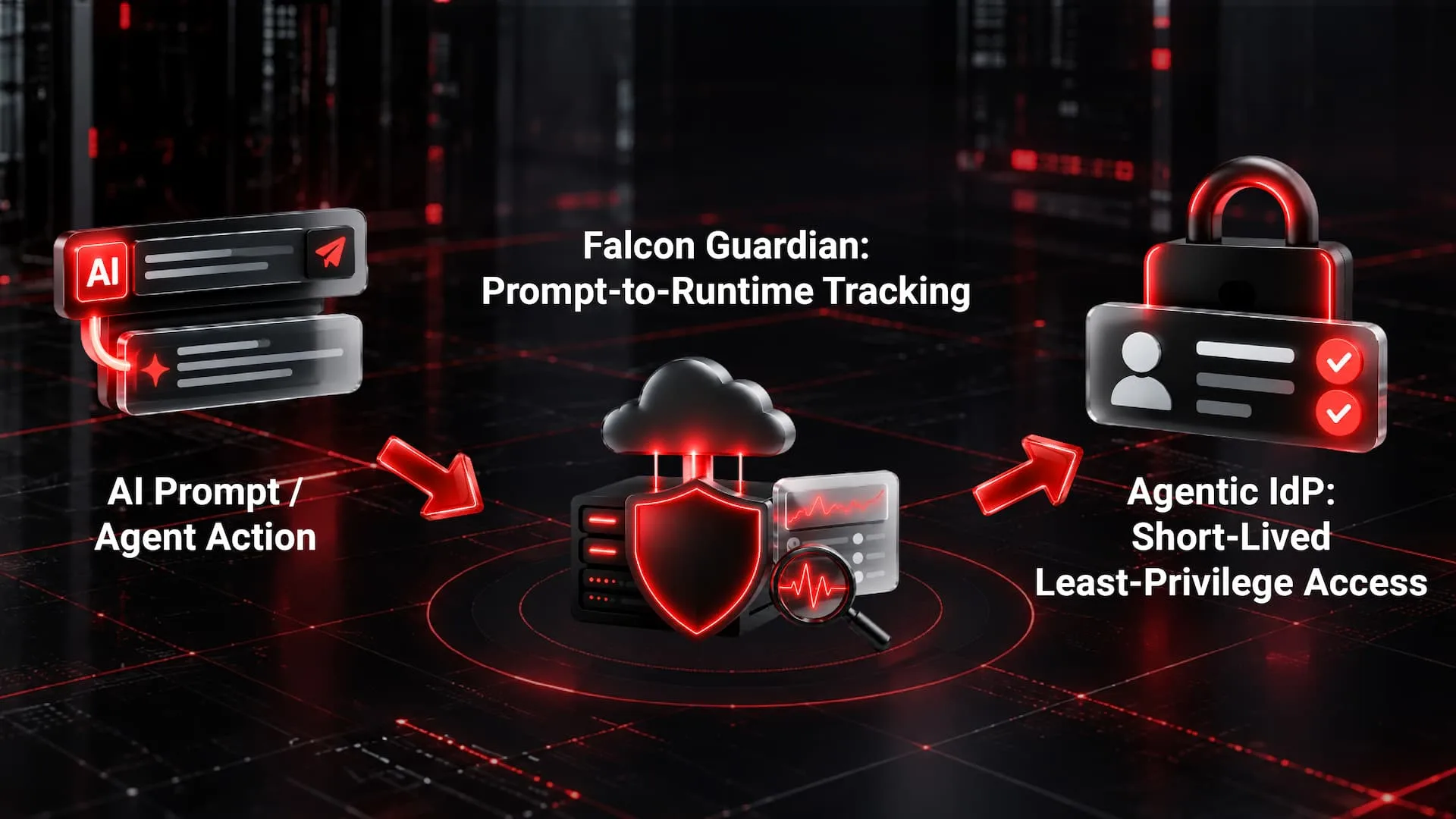
CrowdStrike Agentic Identity Provider (Agentic IdP) gives every AI Agent a trusted identity and connects it to the user or workload behind it. Access can then be granted based on need using least privilege and Zero Standing Privileges.
2. Falcon Guardian
CrowdStrike Falcon Guardian brings AI Detection and Response (AIDR) to monitor and secure AI Agent activity at runtime. It helps security teams understand the relationship between AI instructions, agent actions, and endpoint activity, including risks such as prompt injection and poisoned tools.
AI Prompt → Agent Action → Runtime Activity → Detection & Enforcement
3. Real-Time Software Supply Chain Protection
AI coding agents can pull open-source packages to accelerate software development. If a package is malicious, it can introduce risk to enterprise endpoints.
Real-Time Software Supply Chain Protection helps block malicious open-source packages before their embedded code is executed, reducing software supply chain risk from the start.
How CrowdStrike Optimizes Security Operations with Agentic AI
CrowdStrike is also expanding AI Agent security to help security teams work more efficiently. Agentic SOC enables analysts to work alongside AI agents to investigate threats across endpoint, identity, SaaS, cloud, and network environments.
Through Charlotte Agentic SOAR, security teams can manage AI agents and workflows in a single workspace, with adjustable levels of autonomy ranging from human-in-the-loop to automated execution.
Meanwhile, single-agent architecture helps reduce deployment complexity by supporting multiple security capabilities through a single lightweight agent. The Falcon ecosystem is also expanding to Google Cloud and IT/OT environments for broader protection.
Building the Foundation for an Agentic Enterprise with Virtus
AI Agents can help organizations accelerate work, improve productivity, and automate business processes. However, the greater the autonomy, the more important it becomes to control agent identities and activities.
Enterprises need to ensure that every AI Agent can be identified, given appropriate access, monitored during operation, and linked to the responsible party. Through the CrowdStrike Falcon Platform, this security approach covers AI Agent identity with Agentic IdP, runtime protection with Falcon Guardian, software supply chain protection, and security operations powered by Agentic SOC.
Together with Virtus Technology Indonesia (part of CTI Group), organizations can explore CrowdStrike Falcon capabilities aligned with their security requirements and enterprise IT environments.
Want to understand how AI Agent Identity Security can be implemented in your enterprise environment? Consult your security requirements with the Virtus Technology Indonesia team, or click the button below to download the 2026 Threat Hunting Report and explore the latest cyber threat landscape.
Writer: Ary Adianto
Content Writer, CTI Group