
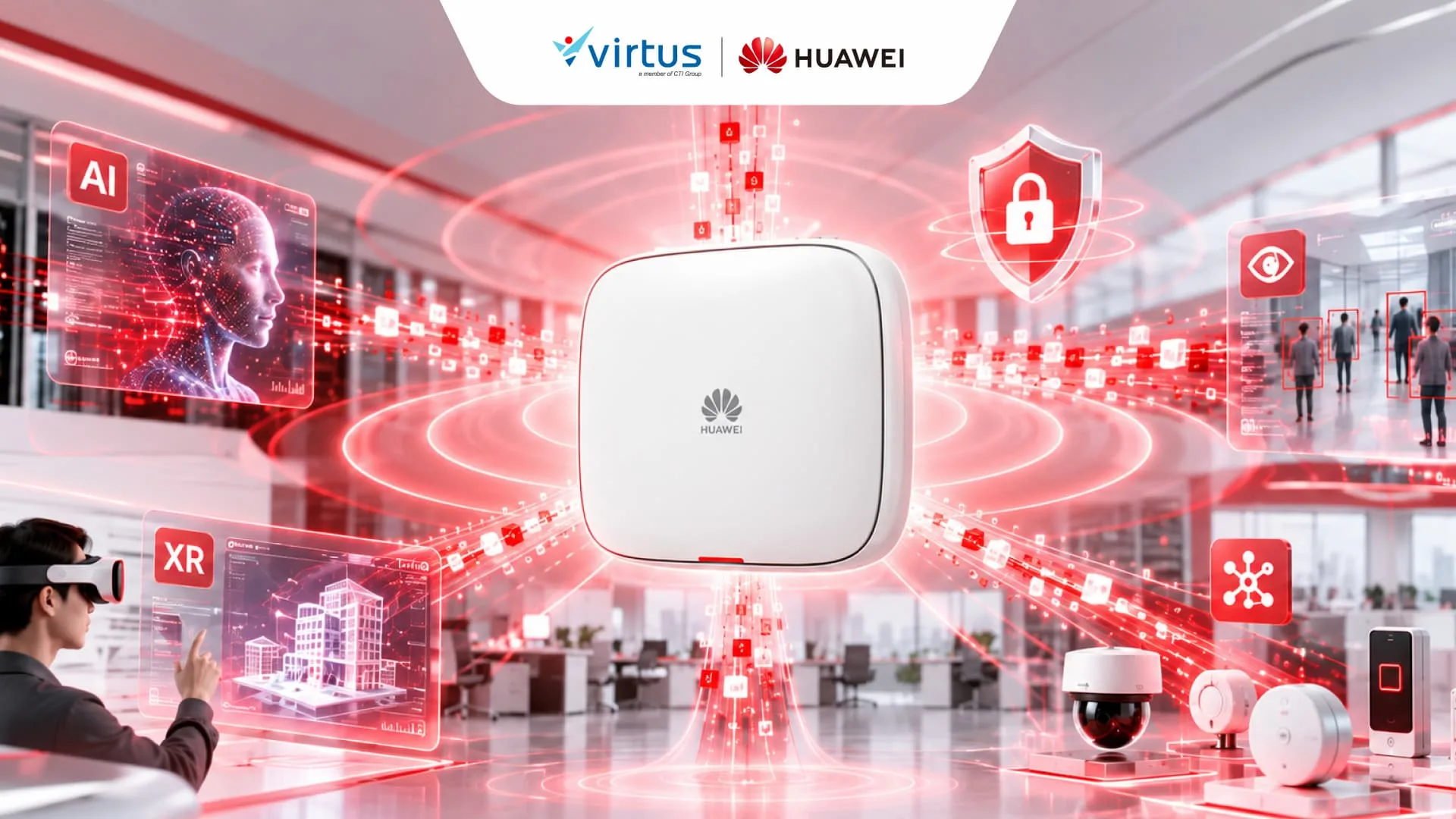
The growing use of AI applications, IoT devices, and digital services is making wireless connectivity increasingly important to business operations. From employees accessing business applications and healthcare professionals using mobile devices to automated systems operating in warehouses, each relies on connectivity suited to its specific needs.
As the number of connected devices grows, businesses need networks that can handle high device density, maintain reliable connectivity, and support data security. Huawei WiFi 7 Advanced is an option for organizations looking to evolve their enterprise wireless infrastructure to support changing application and device requirements.
Why Should Businesses Evaluate Their WiFi Networks?
Network issues are not just about internet speed. Unstable connections can affect application access, video communications, mobile device usage, and operations that depend on real-time connectivity.
These requirements become increasingly relevant as businesses adopt applications such as online AI computing, computer vision, digital humans, and Extended Reality (XR). Such applications and devices can increase data exchange requirements, making network capacity and responsiveness important considerations during infrastructure planning.
Businesses should evaluate several key areas:
- Device density: Multiple users and endpoints accessing the network simultaneously.
- Connection quality: Real-time applications require latency levels suited to their operational needs.
- Device mobility: Connectivity needs to be managed as users and devices move between coverage areas.
- IoT integration: Connected devices and sensors add to infrastructure management requirements.
- Wireless security: Device access and data transmission must be protected in line with corporate security policies.
Choosing WiFi 7 technology should therefore involve more than comparing theoretical speeds. Businesses should also consider site conditions, client devices, network coverage, and application requirements.
Huawei AirEngine Wi-Fi 7 for Enterprise Networking
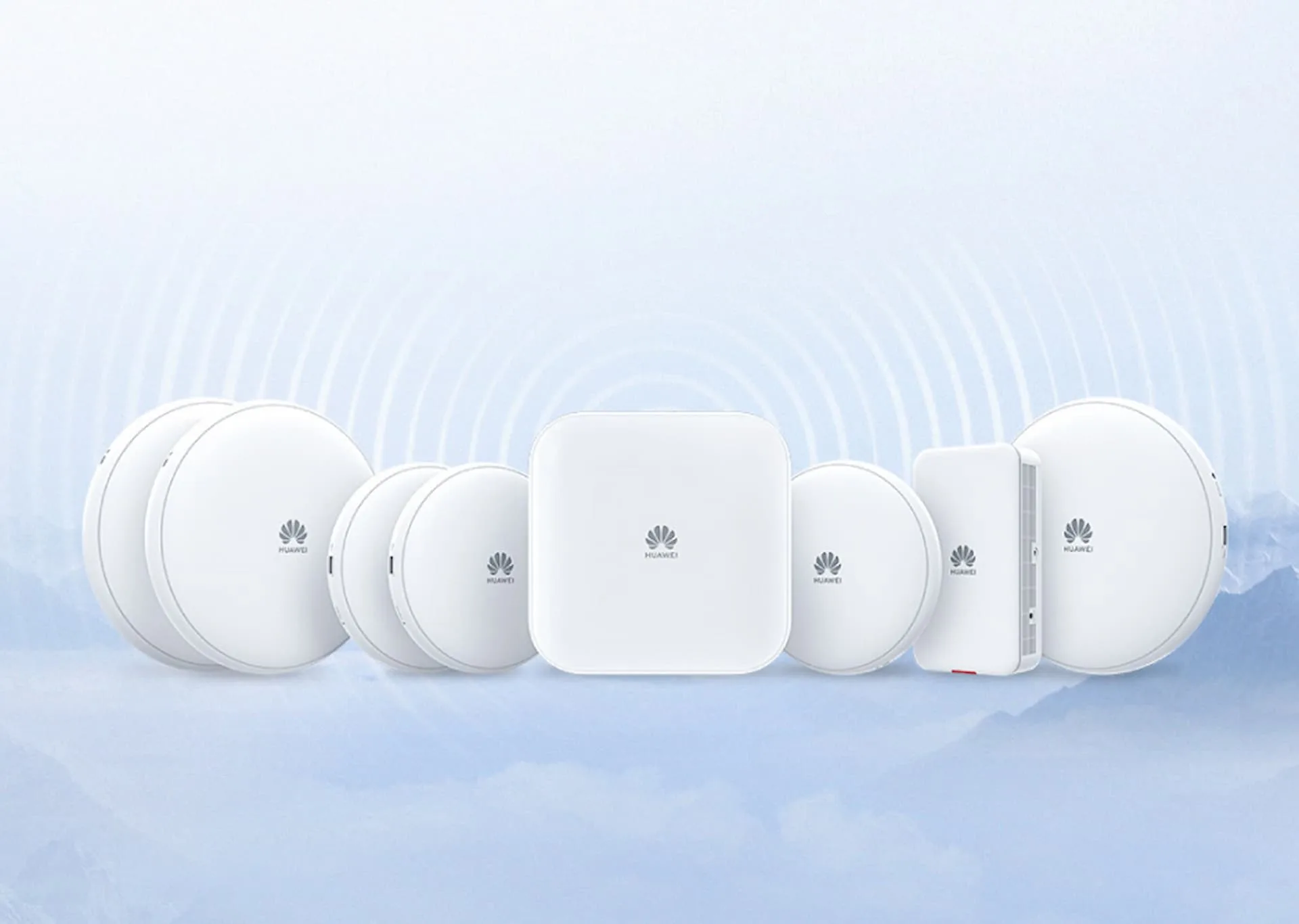
Huawei AirEngine Wi-Fi 7
Huawei AirEngine Wi-Fi 7 is a line of access points designed to support enterprise wireless networking, including environments with high numbers of users and connected devices. Potential deployment scenarios include offices, campuses, hospitals, and manufacturing facilities that rely on connectivity for business applications and digital devices.
Through the Huawei Wi-Fi 7 Advanced approach, businesses can evaluate network designs that extend beyond basic connectivity to include Wi-Fi and IoT integration, device mobility, and security. Device selection and network configuration should be aligned with operational requirements and the existing infrastructure.
Huawei WiFi 7 Advanced Features for Business Needs
Huawei Wi-Fi 7 Advanced combines three key pillars: superfast seamless connectivity, intelligent spaces, and full-scope security. The following features support this approach.
Access Point Coordination and Connection Prioritization
iCSSR Multi-AP Coordination and Dynamic-Zoom Smart Antenna support coordination between access points and wireless signal management. Meanwhile, VIP FastPass is designed to support connectivity prioritization for selected users or services.
These features are relevant for businesses managing high-density environments or applications with different connectivity requirements. Actual results depend on network configuration and deployment conditions.
Wi-Fi and IoT Convergence
Wi-Fi and IoT convergence supports the integration of Wi-Fi connectivity with compatible IoT devices. Huawei also offers CSI sensing, which uses Wi-Fi signal information to support sensing capabilities in certain environments.
These capabilities may be considered for smart building initiatives and digital workplaces, subject to device compatibility and privacy requirements.
Mobility and Network Security
Huawei AirEngine Wi-Fi 7 supports wireless networking requirements in environments with mobile devices. Its zero-roaming technology is designed to help maintain connection continuity as users move between access areas, depending on device support and network design.
For security, Wi-Fi Shield is part of Huawei’s wireless protection approach, while MACsec encryption protects data traffic over supported Ethernet connections. The two technologies serve different purposes and should be deployed according to the enterprise security architecture.
Huawei WiFi 7 Use Cases Across Industries
| Industry | Example business requirements |
| Education | 4K digital classrooms, XR collaboration, cloud desktops, and connectivity in high-density campus areas. |
| Healthcare | Application access for mobile healthcare professionals and connectivity for PDA devices. |
| Manufacturing and logistics | Connectivity for AGVs, industrial cameras, visual inspection, and IoT devices. |
| Finance and retail | Connectivity for branch operations, digital services, and guest networks. |
| Hospitality and public services | Connectivity for smart devices and digital services. |
Requirements vary across industries. Businesses should therefore assess device counts, coverage areas, application needs, and security requirements before selecting a solution.
Evaluate Your Enterprise Network with Virtus Technology Indonesia
WiFi 7 for enterprises is more than a generational connectivity upgrade. Network investments should be based on current business requirements, existing infrastructure, device compatibility, and plans for future digital applications.
As a Huawei value-added distributor in Indonesia, Virtus Technology Indonesia (part of CTI Group) can be a discussion partner for evaluating enterprise networking requirements and identifying suitable solutions.
Author: Ary Adianto
Content Writer, CTI Group