
Today’s organizations operate increasingly complex IT environments, spanning hybrid cloud infrastructures, SaaS applications, endpoints, and APIs. At the same time, the cyber-attack surface continues to expand, generating thousands of security alerts every day.
The challenge is that not every alert is critical. As a result, security teams often suffer from alert fatigue, spending significant time sorting through notifications while potentially overlooking genuinely dangerous threats.
This is why organizations need Risk-Based Vulnerability Management—an approach that enables security teams to prioritize risks based on business impact and the likelihood of real-world exploitation.
The Cybersecurity Dilemma: Why Traditional Vulnerability Scanning Overwhelms Security Teams
Many organizations still rely on vulnerability scanning to identify security weaknesses across their systems and applications. However, as digital assets continue to grow, this approach is becoming increasingly limited.
Security scans often generate thousands of findings without indicating which vulnerabilities pose the greatest business risk. Consequently, security teams struggle to determine remediation priorities.
This highlights the difference between vulnerability scanning and vulnerability management. Vulnerability scanning simply discovers security gaps, whereas vulnerability management encompasses asset identification, risk analysis, prioritization, and continuous remediation.
In addition, using multiple disconnected security tools can increase operational costs and create security blind spots. As a result, more organizations are adopting risk-based vulnerability management to ensure security teams focus on risks that truly impact the business.
Why a High CVSS Score Does Not Always Represent the Most Dangerous Threat?
Many organizations still use the Common Vulnerability Scoring System (CVSS) as the primary indicator for prioritizing security remediation.
However, a high CVSS score does not necessarily indicate the most dangerous threat to an organization.
Modern attackers do not simply target vulnerabilities with the highest severity ratings. Instead, they seek attack paths that are easiest to exploit and capable of causing the greatest business impact.
For example, a vulnerability with a moderate CVSS score may represent a higher risk if it:
- Resides on assets containing sensitive data
- Is accessible from the internet
- Provides an attack path to critical systems
- Has readily available exploits within threat actor communities
This approach is known as contextual risk scoring.
A context-based approach considers multiple factors, including:
- Business impact
- Exposure conditions
- Attack paths
- Exploitability
- Threat intelligence
- Relationships between assets
By understanding risk in its full context, organizations can allocate security resources more effectively and reduce the likelihood of high-impact threats slipping through the cracks.
Introducing Trend Vision One Powered by TrendAI: Consolidated Security Without Blind Spots
To help organizations address increasingly complex cyber risks, Trend Micro introduced Trend Vision One Cyber Risk Exposure Management (CREM), an AI-powered unified cybersecurity platform.
Unlike fragmented security tools, Trend Vision One provides a single risk picture by consolidating multiple security functions into one platform, including:
- External Attack Surface Management (EASM)
- Attack Surface Management (ASM)
- Cloud Security Posture Management (CSPM)
- Cyber Asset Attack Surface Management (CAASM)
- Identity Security Posture Management
- Security Awareness
- Compliance Management
This approach helps organizations reduce tool sprawl, lower operational costs, and simplify security management across hybrid environments.
As an AI cybersecurity platform, Trend Vision One is also powered by TrendAI Cybertron, Trend Zero-Day Initiative (ZDI), contextual risk factors, and broad native sensor coverage. These capabilities provide comprehensive visibility across identities, endpoints, networks, cloud environments, APIs, SaaS applications, and unmanaged assets.
Automating Mitigation Through AI-Driven Remediation to Reduce MTTR
Managing vulnerabilities is no longer just about detection and reporting. Organizations need the ability to identify, predict, prioritize, and respond to threats more quickly.
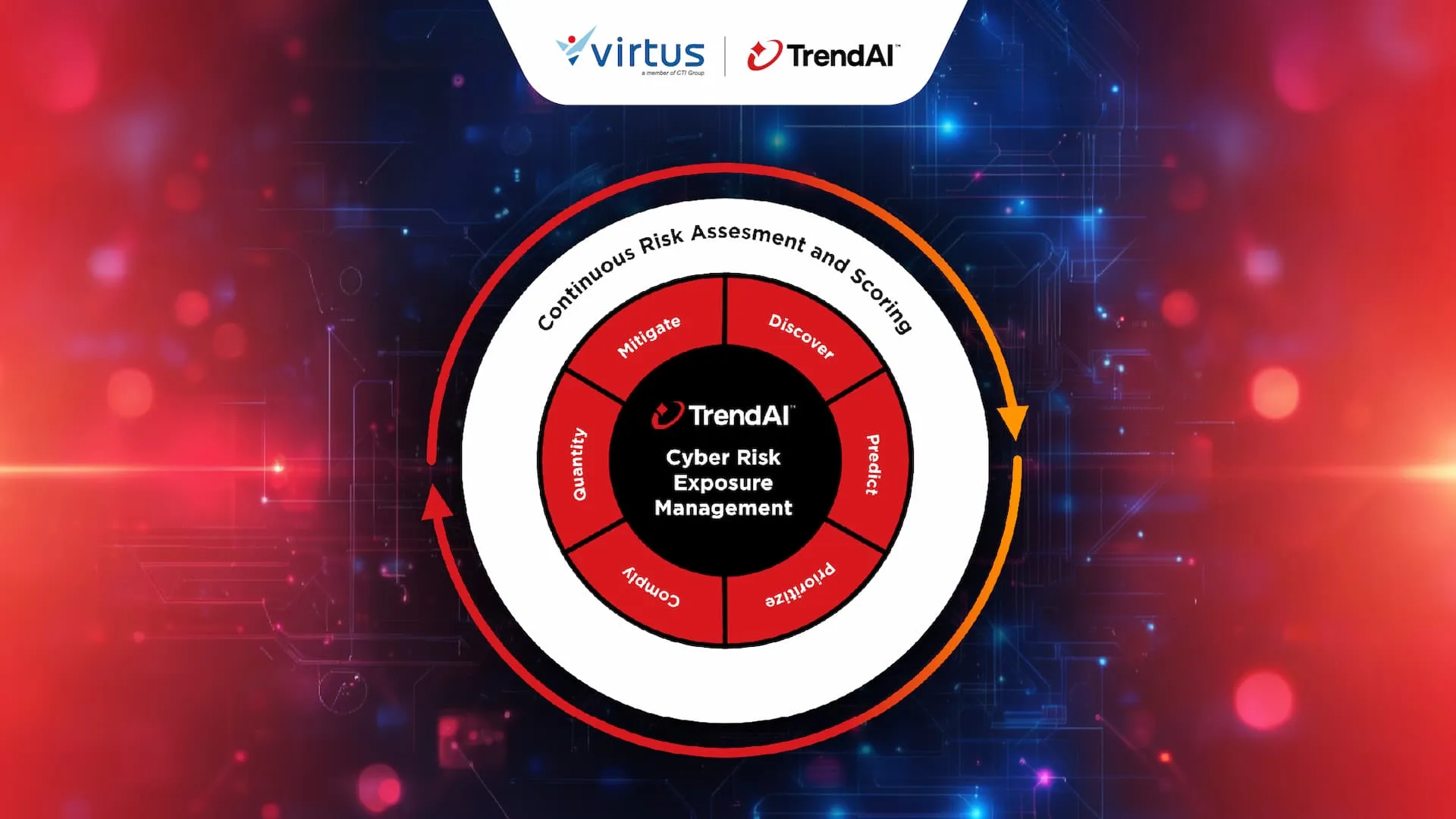
Trend Vision One delivers a comprehensive Cyber Risk Exposure Management approach through an integrated security lifecycle.
Discover
The platform automatically performs real-time asset discovery and provides continuous attack surface visibility across the organization’s entire digital environment.
Predict
Powered by TrendAI Cybertron and global threat intelligence, the platform delivers attack path prediction and threat forecasting to understand how attackers may exploit existing vulnerabilities.
Prioritize
The platform leverages context-driven risk scoring and continuous risk assessment to determine which risks require immediate attention.
This approach helps security teams reduce alert fatigue and focus remediation efforts on threats that have the greatest business impact.
Mitigate
Through AI-driven remediation capabilities, the platform provides AI-guided playbooks and automated workflows that significantly accelerate remediation processes.
Automated threat remediation enables organizations to:
- Reduce alert fatigue
- Accelerate remediation workflows
- Lower Mean Time to Respond (MTTR)
- Automate security workflows
- Improve operational efficiency for security teams
Automated Compliance and Risk Management for Banking and Financial Services
The banking and financial services industry faces increasingly complex security challenges as cloud adoption, mobile banking, digital payments, and third-party applications continue to grow. A single blind spot can lead to data breaches, service disruptions, and financial losses.
Through continuous risk assessment, Trend Vision One provides real-time security visibility and helps organizations identify risks more quickly. The platform also supports compliance readiness through automated audit reporting aligned with global standards such as NIST, GDPR, and FedRAMP.
In addition, cyber risk quantification and executive dashboards help management understand organizational risk exposure and make more informed, data-driven security decisions.
Also Read: Cyber Risk Exposure Management: A Proactive Strategy for Stronger Cybersecurity
Modernize Your Vulnerability Management with Virtus Technology Indonesia
Through Trend Vision One Cyber Risk Exposure Management from Virtus Technology Indonesia (Part of CTI Group), organizations can proactively reduce cyber risks, eliminate blind spots across hybrid environments, and improve security team efficiency.
Strengthen your cybersecurity capabilities with AI-powered visibility and automated remediation from TrendAI. Contact the Virtus team today to discover the right solution for your organization.
Author: Ary Adianto
Content Writer, CTI Group