
Virtualization used to be simple. Pick a platform, deploy it, and move on. For years VMware filled that role and most enterprises never looked back. But the environment has changed and so have expectations.
Today virtualization decisions are no longer just technical choices. They affect cost planning operational agility and how ready an organization is for whatever comes next. Red Hat OpenShift Virtualization Engine steps into this moment with a clear message. You can modernize your virtualization layer without blowing up what already works.
Why Enterprises Are Taking a Hard Look at VMware Today

A lot of enterprises are not actively trying to replace VMware. They are simply asking honest questions they did not need to ask before. Does the cost still make sense. Does the roadmap align with where we are going. Do we still have flexibility or are we slowly getting boxed in.
At the same time virtual machines are not going anywhere. They still power core applications databases and internal systems that businesses depend on every day. Enterprises want options that let them keep those workloads running while reducing risk and regaining control. That is exactly why interest in VMware alternatives keeps growing.
Red Hat OpenShift Virtualization: A Practical VMware Alternative for Enterprises
Red Hat OpenShift Virtualization Engine is designed for organizations that want a clean way forward without forcing big architectural leaps. It focuses on running and managing virtual machines first using KVM as its foundation. No container pressure. No unnecessary layers. Just a modern virtualization platform that feels familiar enough to trust and flexible enough to grow with.
What Is New in OpenShift Virtualization 4.18?
The latest OpenShift Virtualization updates are not about flashy features. They are about making everyday virtualization work smoother and more predictable. Version 4.18 is clearly built with operators and infrastructure teams in mind.
Here is what stands out and why it matters:
A Clean OpenShift Experience Focused Only on Virtual Machines
OpenShift Virtualization Engine strips things back to what VM focused teams actually need. You get a streamlined OpenShift edition purpose built for virtualization without being asked to adopt containers before you are ready. That makes onboarding easier and day one operations far less intimidating.
VM Migration Without the Usual Headaches
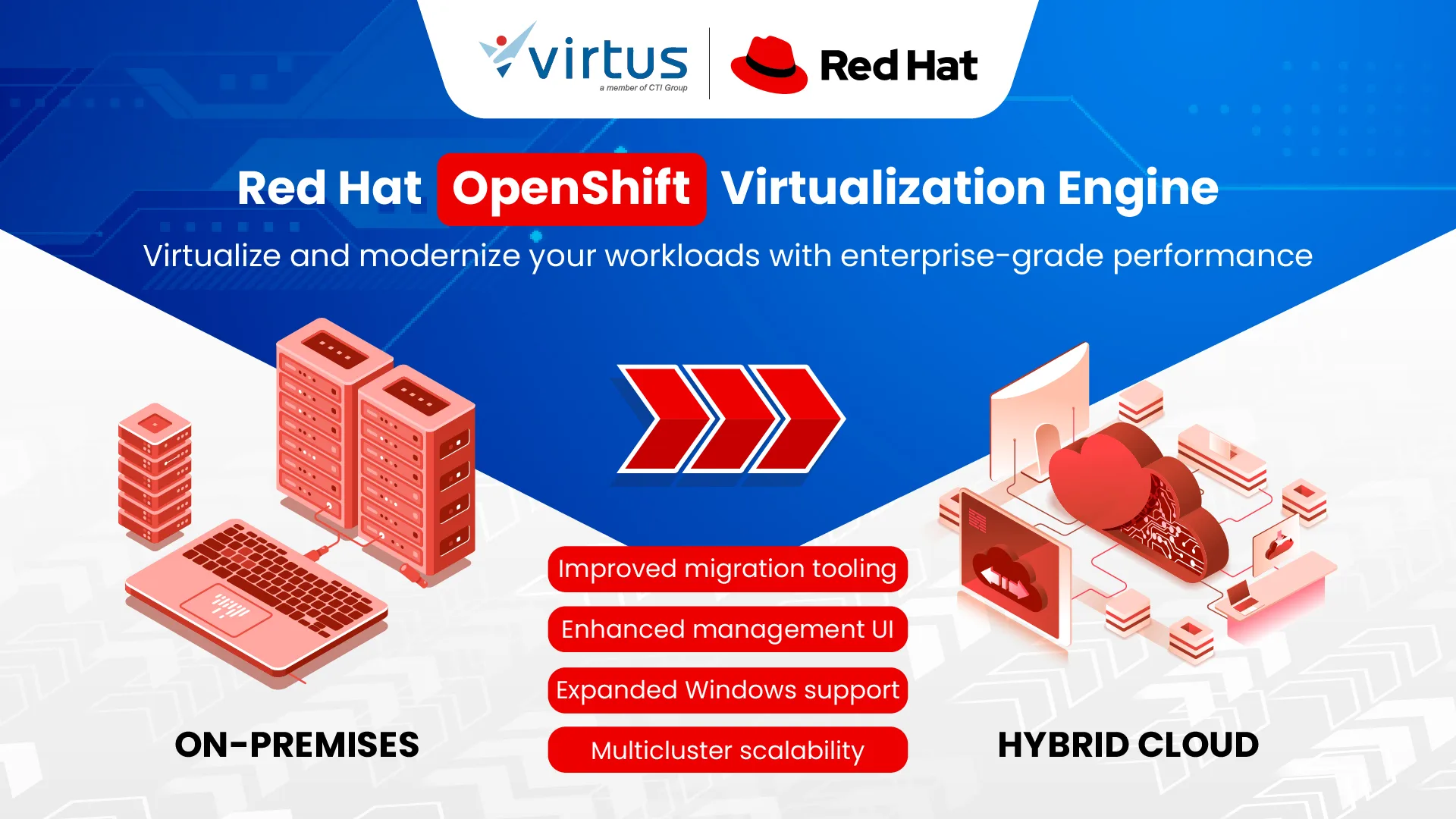
Migration is often where virtualization projects stall. The improved tooling in OpenShift Virtualization 418 helps teams move VMs with less guesswork and less downtime. Automation handles much of the heavy lifting so migrations feel planned and controlled instead of stressful.
A VM Management Interface That Finally Feels Clear
Managing large VM environments should not feel like digging through menus. The updated interface improves navigation grouping and visibility across the VM lifecycle. For administrators this means faster troubleshooting and better day to day control.
Enterprise Ready Support for Windows Workloads
Many critical workloads still run on Windows and that reality is fully acknowledged here. Support for the latest Windows Server versions ensures enterprises can move forward without worrying about compatibility gaps.
Better Visibility Across Clusters
As environments grow visibility becomes just as important as performance. Enhanced observability makes it easier to monitor and manage virtualization across multiple clusters which is essential for hybrid and distributed setups.
What OpenShift Virtualization Looks Like in the Real World
Imagine an enterprise running hundreds of virtual machines across multiple data centers. These systems support finance operations internal platforms and customer facing services. Rebuilding them is not an option and downtime is not tolerated.
With OpenShift Virtualization Engine modernization does not mean starting over. Teams can migrate workloads gradually improve operations step by step and introduce automation when it makes sense. The result is progress without disruption which is exactly what most enterprises are looking for.
Where Enterprises Use OpenShift Virtualization Platforms Today
A modern virtualization platform has to fit into real operational scenarios not ideal diagrams. OpenShift Virtualization Engine is already being used in situations where flexibility stability and cost clarity matter most.
Here are some common use cases:
Refreshing Aging Virtualization Environments
Organizations can replace older hypervisor stacks while keeping existing VMs intact. This allows infrastructure refresh cycles without forcing application changes or retraining teams from scratch.
Running Virtualization Across Hybrid Environments
For enterprises operating both on premises and in the cloud a consistent virtualization layer simplifies management and improves workload portability. Teams get one operational model instead of juggling multiple platforms.
Gaining Better Control Over Virtualization Costs
A subscription model focused purely on virtualization helps organizations avoid paying for capabilities they are not ready to use. Cost planning becomes simpler and more predictable.
Preparing for Containers and Automation at Their Own Pace
VMs continue running as usual while teams explore containers automation or AI workloads when the business is ready. Modernization becomes a journey not a forced leap.
How Red Hat OpenShift Virtualization Engine Works as a VMware Alternative
At its core Red Hat OpenShift Virtualization Engine is built on KVM a proven hypervisor that has powered enterprise workloads for years. It is technology Red Hat has deeply supported and refined in real production environments giving teams confidence that they are working with something stable and well understood.
What sets it apart is how virtualization is delivered. Virtual machines run directly within the OpenShift platform allowing teams to manage VMs the way they always have while gaining built in automation security and lifecycle management. The transition feels like a clean step forward rather than a disruptive replacement.
Making VMware Exit Plans Less Risky
Leaving a virtualization platform is never just a technical move. It affects operations budgets and business continuity. OpenShift Virtualization Engine is designed to support gradual transitions so teams can move workloads on their own schedule.
Built in migration tools and enterprise support help reduce uncertainty and downtime. This makes it easier for organizations to plan a VMware exit with confidence instead of rushing decisions under pressure.
Getting Virtual Infrastructure Ready for What Comes Next
Virtualization may still be the priority today but tomorrow brings automation cloud native applications and AI workloads. OpenShift Virtualization Engine allows enterprises to prepare for that future without walking away from existing investments. It provides a steady bridge between what works now and what the business will need next.
Take Enterprise Virtualization to the Next Level with Virtus
With strong expertise in enterprise infrastructure Virtus Technology Indonesia from CTI Group helps organizations adopt Red Hat OpenShift Virtualization Engine with confidence. Virtus supports the transition from legacy virtualization platforms by guiding migration planning implementation and ongoing operations in a structured and secure way.
Connect with the Virtus team today to see how OpenShift Virtualization Engine can help modernize your virtualization environment while keeping operations stable and ready for the future.
Author: Danurdhara Suluh Prasasta
CTI Group Content Writer