
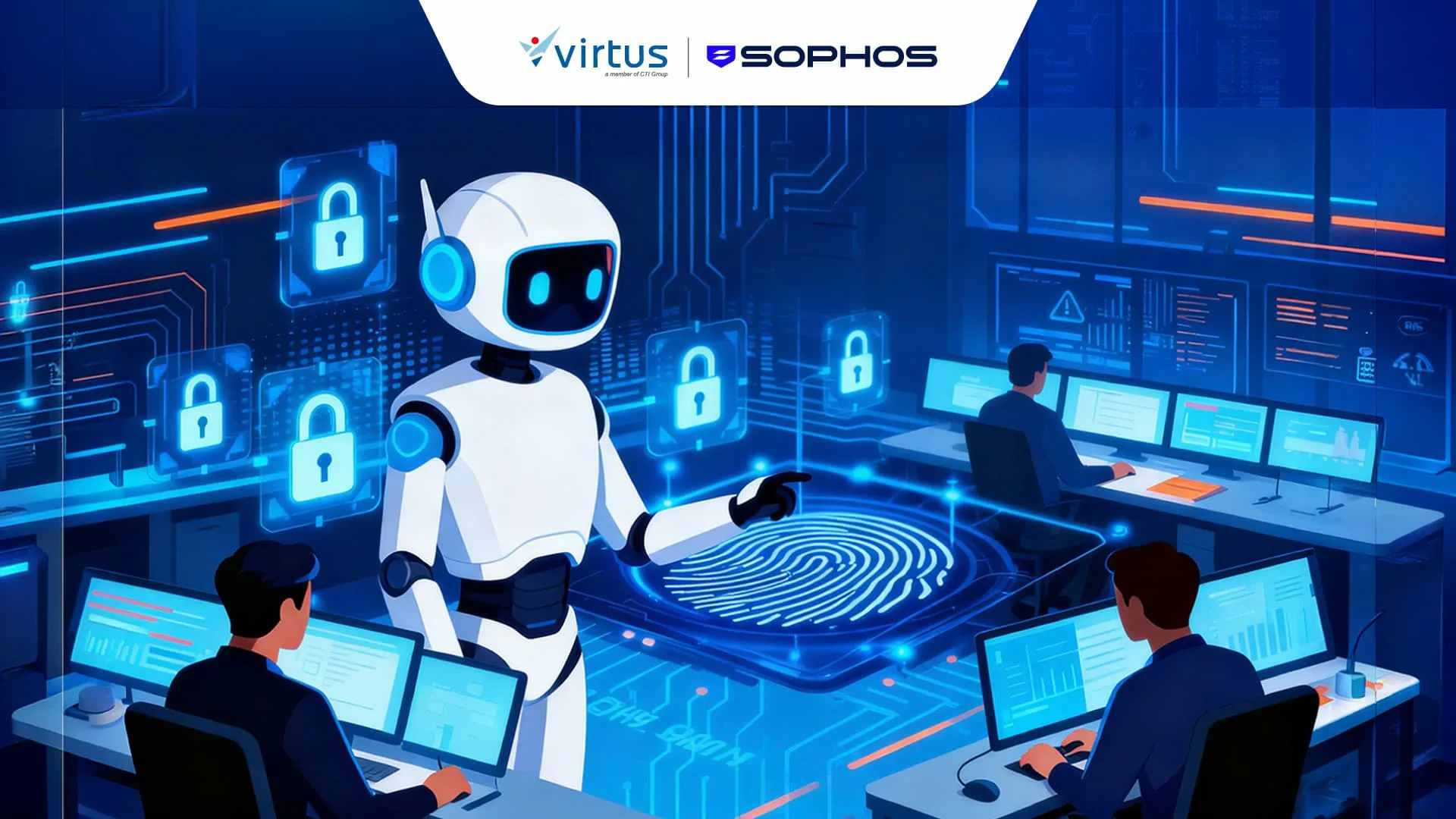
Security teams today are not struggling to find alerts. They are struggling to make sense of them.
Across enterprise environments, security tools generate a nonstop stream of signals from endpoints, networks, cloud environments, and everything in between. Every signal could point to suspicious behavior, a misconfiguration, or the early signs of an attack. The challenge is no longer just about detection. It is about knowing what matters, what needs action, and what can safely be ignored.
That pressure is pushing Security Operations Centers (SOC) to evolve. One model gaining momentum is agentic SOC, an approach that uses AI agents to help security teams analyze signals faster, understand threats earlier, and respond with greater speed and precision.
Alert Fatigue: When Alert Volume Starts to Overload the SOC
Many Security Operations Centers (SOC) receive thousands, sometimes tens of thousands, of alerts every day from security tools monitoring endpoints, networks, and cloud environments. But not every alert points to a real threat. A large portion of them are simply noise, false positives, or low-priority notifications.
This is what creates alert fatigue. Security analysts are forced to process too many signals at once, making it harder to separate the alerts that require action from the ones that do not.
Understanding Agentic SOC: A New Standard for Managing Cybersecurity
The rise in alert volume and the growing complexity of attack patterns is driving a new approach to cybersecurity operations: agentic SOC. This model uses AI agents to automate key security workflows, from alert triage and suspicious activity analysis to signal correlation across systems.
AI in an agentic SOC is not there to replace analysts. It is there to strengthen them. AI agents process large volumes of security signals at machine speed, while human analysts remain in control of investigation and decision-making. This combination makes security teams more adaptive, accelerates threat detection, and improves incident response effectiveness.
The Benefits of Agentic SOC for Security Teams
Bringing AI agents into the SOC changes how threats are analyzed and handled. Tasks that once required heavy manual effort can now move faster through automation, giving analysts more room to focus on the threats that matter most.
This approach brings several important benefits to modern cybersecurity operations.
Less Alert Noise
AI agents help filter irrelevant alerts and eliminate duplicate activity, making it easier for analysts to prioritize threats that carry real risk.
More Consistent Threat Analysis
AI agents follow structured investigation workflows based on security playbooks, helping teams maintain analysis quality even as alert volume continues to grow.
More Flexible SOC Capacity
By automating security workflows, organizations can expand SOC capacity without significantly increasing the workload placed on analysts.
Sophos AI Agents: The Intelligence Powering Agentic SOC
Within an agentic SOC approach, Sophos uses AI agents to support critical security workflows inside the SOC. These AI agents process security signals at scale, filter irrelevant activity, and help analysts spot early signs of threats sooner.
Working alongside SOC analysts, Sophos AI Agents help build incident context faster through activity correlation and compromise indicator analysis. With a clearer picture from the start, security teams can understand threats faster before deciding on the right response.
How Sophos MDR Uses AI Agents to Accelerate Threat Detection and Response
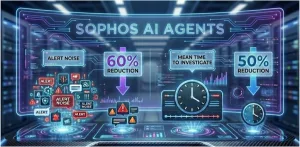
Source: Sophos AI Agents
Sophos Managed Detection and Response (Sophos MDR) helps enterprises strengthen security operations by combining expert human analysts with the power of Sophos AI Agents. This approach allows security teams to detect, understand, and respond to threats faster without having to manage the entire analysis process manually.
With this model, enterprises can run a more efficient SOC without having to significantly expand their security teams. Threat analysis becomes faster and more structured, allowing teams to prioritize high-risk incidents and stop potential attacks before they disrupt business operations.
Also Read: Sophos Endpoint Protection: 16-Time Consecutive Leader in the Gartner Magic Quadrant 2025
<h2>Strengthen Your Cybersecurity Operations with Virtus</h2>
Virtus Technology Indonesia (VTI), part of CTI Group, helps enterprises strengthen security operations through Sophos Managed Detection and Response (Sophos MDR). With deep cybersecurity implementation experience, VTI helps organizations improve threat detection, accelerate incident response, and strengthen overall cyber resilience.
Contact the Virtus team to learn how Sophos MDR can help your organization build a more adaptive security operation, accelerate threat analysis, and improve response capabilities against evolving cyber threats.
Author: Danurdhara Suluh Prasasta
CTI Group Content Writer